The Future of Geospatial: Key Trends for 2026

The geospatial sector has evolved and rapidly grown over the past decade, and in 2026, its role within organisations is more critical than ever. What was once primarily used for mapping and visualisation has become a powerful intelligence tool, connecting data, places, and decision-making across industries.
As organisations face increasing pressure to operate sustainably, manage risk, and make faster, more informed decisions, geospatial is stepping into a central role. Below are three key geospatial trends shaping 2026, and what they mean for organisations.
1. Platform for Sustainability and Regulatory Confidence
In 2026, geospatial will become a cornerstone for sustainability initiatives and regulatory compliance. Organisations are no longer relying on disconnected datasets or static reports to demonstrate environmental performance. Instead, spatial data provides the evidence base for understanding land use, monitoring environmental change, and meeting growing regulatory and stakeholder expectations.
Geospatial technology enables organisations to track environmental impacts across complex geographies, support transparent reporting, and respond confidently to audits and compliance requirements. Linking location-based data with sustainability frameworks is now essential for organisations seeking accountability, traceability and trust.
2. AI-Enabled Spatial Intelligence
Forms of artificial intelligence, such as machine learning and deep learning, which underpin automated tasks in the geospatial sector, have long existed; in recent years, the global rise and spotlight on AI have accelerated their development. In 2026, AI-driven analytics will automate processes such as feature extraction, change detection, anomaly identification and predictive modelling across vast datasets.
This shift allows organisations to move from understanding what has happened to anticipating what may happen next. Increasingly used to forecast risk, optimise operations, and support proactive decision-making. As a result, spatial data is no longer just descriptive; it is predictive and prescriptive, helping organisations act with greater confidence.
3. Digital Twins and 3D Geospatial Intelligence
In 2026, geospatial will continue to move beyond traditional 2D mapping into rich 3D and digital twin environments. Advances in reality capture technologies, including LiDAR, drone imagery, mobile mapping and photogrammetry, are enabling organisations to create detailed, dynamic representations of the physical world.
Digital twins provide a shared spatial context for planning, operations and asset management. Rather than static models created for a single project, digital twins are becoming living systems that evolve over time, integrating new data to reflect real-world change.
For organisations managing complex infrastructure, urban environments or natural systems, 3D GIS and digital twins support better coordination, risk identification and scenario testing. In 2026, they are increasingly used not just to visualise environments, but to simulate outcomes, support long-term planning and improve decision-making across the asset lifecycle.
Looking Ahead
As these trends converge, geospatial continues to shift from a supporting technology to a strategic one. In 2026, it serves as an intelligence layer, bringing context and clarity to complex challenges across sustainability and infrastructure, as well as operations and risk management.
For organisations navigating an increasingly data-rich and regulated world, geospatial technology provides the foundation for smarter, more informed decisions. At NGIS, we see these trends reflected in how our clients are using geospatial technology not just to visualise the world, but to understand it, manage it, and plan for what comes next.
Contact us today to find out more about how we can assist your business in 2026.
Related Articles
Here are more related articles you may be interested in.
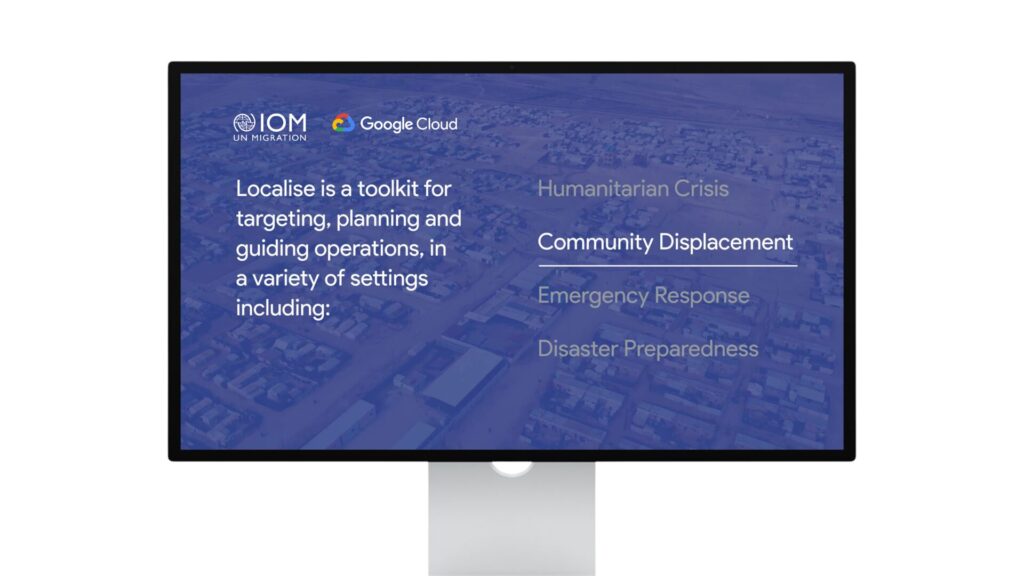
United Nations, Google Cloud and NGIS Team Up to Bring AI-Powered Planning to Communities in Crisis
The United Nations International Organization for Migration (IOM), in partnership with Google Cloud and NGIS are advancing data-driven humanitarian planning through the use of AI and Geospatial powered tools, helping humanitarian organisations to analyse the most vulnerable locations across multiple areas and proactively plan for disaster response, climate driven displacement, and long term community recovery. At the centre of the initiative is the…Celebrating Women in GIS: More than Maps
From tracking deforestation to building geospatial tools from the ground up, the women at NGIS are driving impactful real-world outcomes. This International Women’s Day, we spoke to three women across our Earth Observation, software engineering and spatial analysis solutions, to find out what first attracted them to GIS, what keeps them here, and what they’d tell their younger selves starting out.NGIS joins global space-based solutions provider CLS
Media Release | 27th January 2026 NGIS is excited to announce that the company will now be part of CLS (Collecte Localisation Satellites), a global leader in monitoring and surveillance solutions for our Earth. The acquisition marks a significant milestone for the Australian geospatial sector, bringing together NGIS’ world-class geospatial expertise with CLS Group’s expansive reach and innovative capabilities in space-based solutions. Beyond technology and commercial…The view from the Cuipo Tree: Rethinking Biodiversity Beyond Protected Areas
Biodiversity Biodiversity is often discussed in abstract terms, percentages protected, species at risk, and hectares conserved. Ecological networks operated at vast and local spatial scales. It lives at the intersection of forests and farms, rivers and roads, protected areas and working landscapes. Geospatial intelligence allows us to see these intersections clearly: to understand where species…